
Ormewood Park
Historic Homes. Creative Spirit. Intown Living.
Ormewood Park Real Estate | Atlanta, GA
Ormewood Park Homes for Sale





About Ormewood Park
Established Southeast Atlanta Living Along the BeltLine
Ormewood Park is an established residential neighborhood on Atlanta’s southeast side, positioned between Grant Park, East Atlanta, and the Atlanta BeltLine. Its tree-lined streets, older cottages and bungalows, newer homes, and convenient location have made it increasingly attractive to buyers who want an Intown neighborhood without the pricing typically associated with some of Atlanta’s better-known eastside communities.
The neighborhood doesn’t have the architectural uniformity of Inman Park or the park-centered identity of Grant Park. Instead, Ormewood Park developed gradually, leaving it with a varied collection of homes and streets that can change noticeably from one block to another.
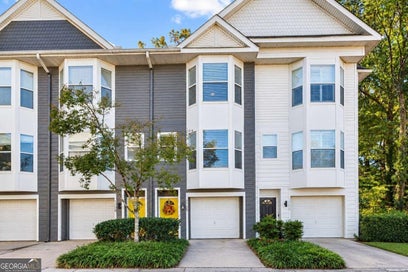
That variety is part of the neighborhood’s character. Original cottages and Craftsman-era homes sit alongside renovated properties and newer construction, while the BeltLine and redevelopment around Glenwood Avenue have changed the neighborhood’s relationship with the surrounding city.
Today, Ormewood Park occupies an increasingly central position in Southeast Atlanta: close to Grant Park and East Atlanta Village, directly connected to the BeltLine corridor, and only a few miles from Downtown.
From Atlanta’s Early Expansion to the BeltLine
Ormewood Park emerged as Atlanta expanded outward during the late 19th and early 20th centuries, an era when transportation improvements were allowing residential development to move farther from the city’s commercial center. Across Atlanta, street railway expansion helped turn previously rural land into a succession of new residential neighborhoods. The City describes this broader period as the emergence of Atlanta’s early “trolley neighborhoods.”
Unlike Inman Park, Ormewood Park was not created as a single, highly planned suburban development. It grew in pieces over time. That history remains visible in its housing: Victorian-era cottages and early homes are mixed with Craftsman bungalows, later 20th-century houses, renovations, additions, and contemporary infill.
Its location also placed Ormewood Park beside several neighborhoods with very different histories. Grant Park developed around the park donated by Lemuel P. Grant and was already expanding rapidly by the late 19th century as streetcar service improved. East Atlanta developed farther east around the Moreland Avenue corridor. Ormewood Park grew between them rather than around a single major civic institution or development plan.
For much of the 20th century, Ormewood Park remained a relatively modest residential neighborhood. Like many older Intown communities, it experienced periods of disinvestment as Atlanta’s population and development moved outward.
The return of investment to Atlanta’s east and southeast side gradually changed that trajectory. Older homes were renovated, vacant or underused properties were redeveloped, and new construction became increasingly common.
The Atlanta BeltLine accelerated that transformation.
The BeltLine follows Atlanta’s former railroad corridor and is being developed as a 22-mile network of trails, parks, transportation connections, and redevelopment. In Ormewood Park, that former industrial edge has increasingly become an amenity connecting the neighborhood with Grant Park, Glenwood Park, Reynoldstown, and the larger eastside BeltLine corridor.
It is a good example of how Atlanta has repeatedly been reshaped by transportation: first by streetcars and railroads, later by automobiles, and now by the reuse of former railroad corridors for the BeltLine.
Buying a Home in Ormewood Park
Ormewood Park can offer buyers more choices than many of Atlanta’s more tightly defined older neighborhoods, but those choices require careful comparison.
Housing ranges from smaller cottages and Craftsman bungalows to extensively renovated older homes and substantial newer construction. Lot sizes, topography, renovation quality, parking, and the character of individual streets can vary considerably.
That means price per square foot alone is not particularly useful for evaluating the neighborhood.
An original bungalow needing substantial work shouldn’t be evaluated against a recently constructed home simply because the two properties have similar square footage. Renovated older homes present another set of questions: the quality of the renovation, age of major systems, additions, structural work, drainage, and whether improvements were properly executed.
Newer construction also varies. Buyers should look beyond finishes to floor plan, construction quality, lot utilization, drainage, privacy, and how well the house fits its location.
Street selection is especially important in Ormewood Park. Some sections are predominantly residential and feel removed from surrounding activity, while others provide quicker access to the BeltLine, Glenwood Avenue, Moreland Avenue, or nearby commercial areas.
For buyers trying to remain Intown while keeping the purchase price below comparable homes in some of the most expensive eastside neighborhoods, Ormewood Park can make considerable sense. The tradeoff is a neighborhood that is less architecturally consistent and where location within the neighborhood can have a greater influence on the individual property.
My role is to help buyers understand those differences, evaluate condition and renovation quality, and determine whether the price reflects the actual property rather than simply the popularity of Southeast Atlanta.
Selling a Home in Ormewood Park
Selling in Ormewood Park requires recognizing that buyers have numerous alternatives nearby.
A buyer considering an Ormewood Park house may also be looking in Grant Park, East Atlanta, Reynoldstown, Kirkwood, or other Southeast Atlanta neighborhoods. Pricing therefore needs to reflect not only recent sales within Ormewood Park but what the same buyer can purchase elsewhere.
Condition is particularly important because the neighborhood contains such a wide range of housing.
For an older cottage or bungalow, buyers may respond strongly to preserved character and thoughtful improvements, but deferred maintenance can quickly affect value. Roofs, foundations, drainage, electrical and plumbing systems, HVAC, windows, and previous additions should be considered before the property reaches the market.
For renovated or newer homes, the comparison changes. Buyers are more likely to scrutinize construction quality, floor plan, finishes, outdoor space, parking, and whether the property justifies its premium over an older home nearby.
I prefer to begin that process early. When possible, I help sellers determine which repairs, painting, landscaping, staging, or other improvements are worthwhile before listing—and which expenditures are unlikely to produce a meaningful return.
I can also assist with coordinating contractors and other preparation when needed.
Once the property is ready, professional photography and presentation should make the home’s advantages immediately understandable. Pricing and marketing should then position the property against the alternatives buyers are actually considering rather than relying on a generic Southeast Atlanta narrative.
Relocating to Ormewood Park
Ormewood Park is particularly useful for relocating buyers who want to be close to Atlanta’s eastside neighborhoods but don’t necessarily need to live at the center of their commercial districts.
Grant Park lies immediately to the west, East Atlanta is to the east, and Glenwood Park and the BeltLine corridor are directly to the north. Downtown Atlanta is only a few miles away, and I-20 provides convenient east-west access across the city.
The BeltLine has become increasingly important to the neighborhood. City transportation planning specifically identifies connections between Ormewood Park, Grant Park, and the BeltLine as part of the area’s transportation network.
For daily life, that means residents can combine a traditional residential neighborhood with access to walking and cycling routes and nearby restaurants, shops, and services.
East Atlanta Village provides one of Southeast Atlanta’s established restaurant and entertainment districts, while Glenwood Park offers a newer mixed-use environment closer to the BeltLine. Grant Park provides substantially more public green space as well as Zoo Atlanta.
The differences among these neighborhoods are worth understanding.
Grant Park has a stronger historic identity and is organized around one of Atlanta’s major parks. East Atlanta is more eclectic and commercially oriented around East Atlanta Village. Glenwood Park is newer and more intentionally planned. Ormewood Park is primarily residential and sits between all three.
For relocating buyers who don’t know Southeast Atlanta, driving through the neighborhood isn’t enough. The differences between streets, proximity to commercial corridors, BeltLine access, and the surrounding neighborhoods are much clearer when the area is toured in person.
Thinking of Selling in Ormewood Park?
Get a current market analysis and find out what your home is worth in today’s market.
Get a Market AnalysisExplore Nearby Neighborhoods
Explore Nearby Neighborhoods: Oakhurst, City of Decatur, Kirkwood, Edgewood, Reynoldstown, Cabbagetown, Lake Clair, and Candler Park and Old Fourth Ward